
Biracial Bullshit
Revisiting a post from 2024 we're still thinking about

As we gear up for our upcoming Biracial Table on Monday, April 27 (a few tickets remain!) I’m thinking back to when Kamala was running (if only. . . ) and Trump was firing up his fuckery of the moment (seems kind of quaint by today’s standards) by trotting out the old chestnut of acting “confused” about a biracial person’s identity.
“Is she Indian or is she Black?” As much as I hate to quote him, this is the quote.
Well, she’s both. And, she’s something else. A third thing. She’s biracial. I happen to think we are kind of superheroes that way. It’s a biracial thing. You might not understand, but I bet my biracial bretheren do. . .
So in the spirit of biracialness, we’re republishing a post from 2024, which includes the voice of Sabrina Fluegel, BFA co-founder, who will be acting as emcee for the night of the 27th— she has a fascinating biracial story of her own. We hope to see you there!
The knee-jerk reaction from all of us mixed folks to Donald Trump’s racist remarks on Kamala Harris’ identity was to get triggered.
Sabrina and I were no different, and the longer we sit with it, the more we have to think about it.
Why is America doing this to us, actually?
How the two of us are processing– two different mixed kids, two different takes.
More proof that you can’t just make us choose one box.
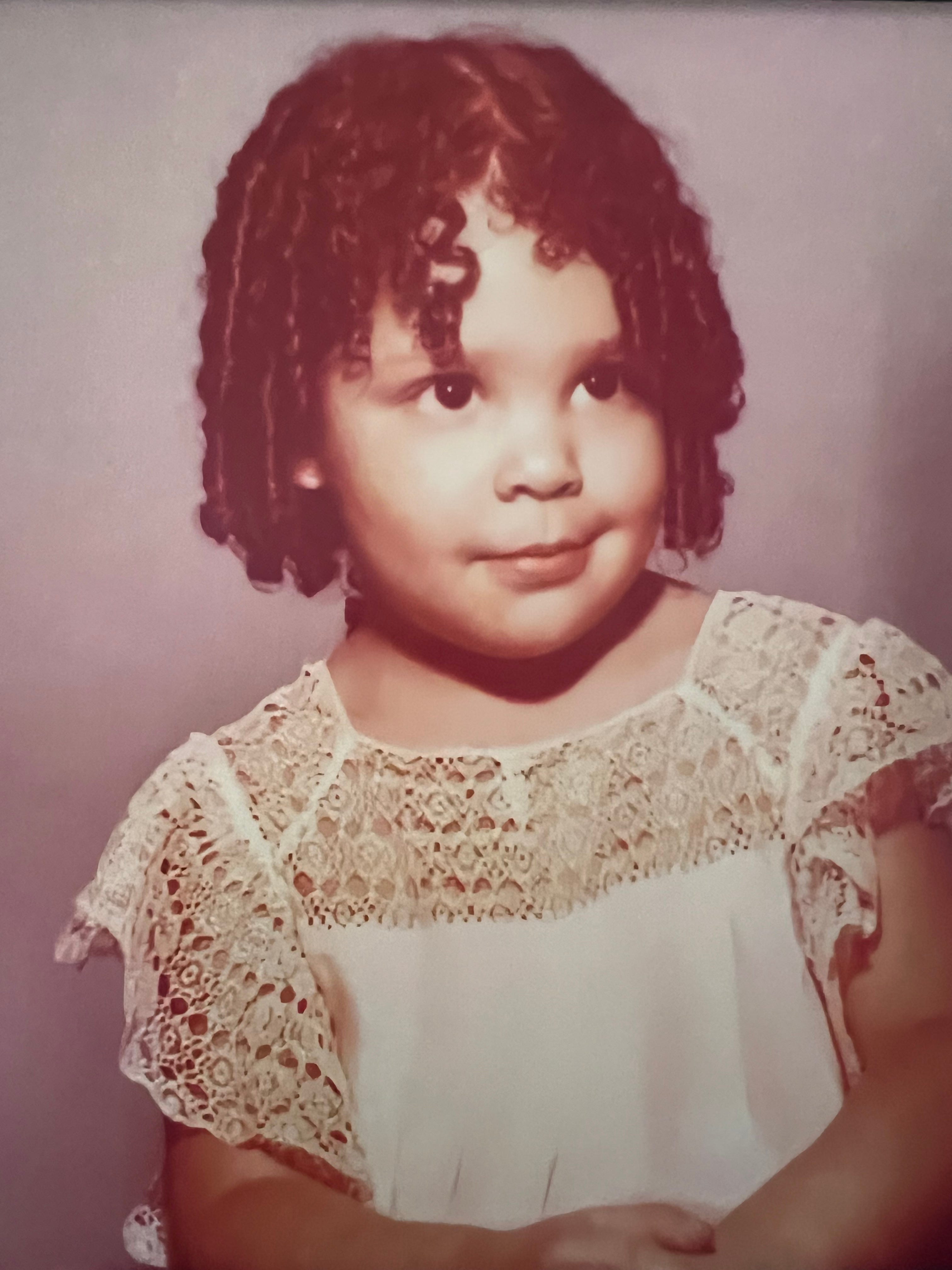
Mecca’s Take: Is Trump triggering me, or nah?
Whenever confronted with a “choose your race” box on a form, I’m immediately shot back into grade school, where I sit agonizing over the paper, trying to sort out my identity.
Back then, I knew that I was being raised by my white mother and her extended white family. If I was being honest, I probably would have identified as white, if I wasn’t simultaneously looking down at my mocha brown arms, acutely aware of the fact that I could absolutely not, ever, ever pass for white, even if I had wanted to. Not that I wanted to, but inarguably, I was not culturally Black, even if I was physically.
I was born and raised into an extremely white environment in a working-class enclave of St. Paul, Minnesota, where I didn’t really see an abundance of people who looked much like me until high school.
Until then, I endured racial slurs like “Brownie,” or “Brown Cow,” (I was chubby, in addition to being brown– an unfortunate combo indeed if I wanted to blend in, which at the time I did, desperately) and the occasional “N-word”– but those were usually overheard, not overt (most people tried to, at minimum, not use that one directly in my earshot but they didn’t always succeed in their attempted discretion).
I was neither white nor Black, and way back then (1970’s-1980’s) there was no box for “biracial” or “multiracial.” It seemed like you had better figure out what you were, and start filling in the box, though sometimes I defiantly filled in the bubbles for both– one for white and one for Black.
When I say that this was agonizing, it is not hyperbole. Did I acknowledge my milk chocolate brown skin, or did I choose my family? It seemed like an impossible choice.
And that’s because it is.
There’s been a lot of media around Donald Trump’s racist comments about Kamala Harris, much of it around how triggering it is for us biracial folks to have to listen to it.
And if it weren’t triggering to me, I suppose I wouldn’t be writing this essay.
But the more I thought about it, I had to ask myself: is this, in fact, triggering? Or is this more of the same ol’, same ol’ American bullshit– bullshit that I should be completely accustomed to after 50 years walking in this body in this problematic country?
While it should be beautiful to be bi- or multi- racial, it is in fact a very difficult skin to be in. It’s not just white supremacy that makes it so, but oftentimes the very people in your own DNA who can make life painful.
What I’m about to say is nothing new: you’re never Black enough or white enough to fit in anywhere, a fact that ultimately led me to decide that multiracial identity is its own thing– neither Black nor white.
This has gotten me into trouble more than once– a friend once called me out on it, asking if I was trying to find a loophole out of being Black– a la “I’m not Black, I’m O.J.”
I was completely wounded and beyond frustrated– this person could not have possibly known what it is like to be biracial, and I was offended that I was being asked to defend my position.
When identifying as Black, I’ve received cockeyed looks from other Black folks, and when I identify as biracial, I get the same cockeyed looks. You can’t win.
For a while, I settled on “Biracial-Black” which is a mouthful, and feels kind of exhausting, so I’ve since mostly dropped it, except occasionally in writing.
After Barack Obama’s Presidency– our first “Black” (actually biracial) president, I started identifying as Black more often– if Barack was Black, then so was I. It was a supremely wonderful time to be either Black or biracial in America– however you chose to identify.
Things have gotten less supremely wonderful to be Black or biracial in this country (though I still wouldn’t trade my Blackness in for all of the riches in the known universe). Born in Minnesota just after the Civil Rights Movement (1973) I never thought I would see the day that moving freely around the country would feel dangerous for me because of the color of my skin, but here we are.
America invented the “one drop rule,” which is exactly what it sounds like– if you have one drop of Black blood, then you’re just Black. Why? To uphold white supremacy, of course. But to me, if we’re still making Black folks with just one drop, this works very much in our favor– not the other way around.
I’m an expert at clocking folks who look like they have that one drop– hair that’s just a little too kinky, or too copper red to just be white hair. Your skin can be alabaster white, but those freckles, those dark gums, those juicy lips give you away.
But why should any of this matter? Why do I perk up when I see someone with the above description, and feel a little private thrill inside?
I think it’s because there’s an “us-ness” in seeing people like this– living proof that biracial identity, in all its rainbow of permutations is on full display, from albinos with red afros to Hershey brown boys with one white grandma. It makes me feel like I have a tribe in a country that has done its best to separate me from one.
White supremacy’s obsession with race is at its core nothing more than an attempt at covering shame, which any therapist will tell you never works. If we don’t face up to our mistakes and admit wrongdoing, all we will ever do is flounder. As James Baldwin famously put it, “I imagine one of the reasons people cling to their hates so stubbornly is because they sense, once hate is gone, they will be forced to deal with pain.”
Anywhere we step in this country, we are trodding on shame and pain, so old, and so poorly buried that it stinks just to breathe the air.
Forcing us to choose a box is nothing more than a giant gaslight– one that attempts to cover up the fact that we are all mixed up in this crazy legacy that not a single person living today chose, even if their ancestors might have.
Like a dog kicking up soil to cover its shit, it’s a lame attempt at pretending that you didn’t just lay down a hot dump.
Trying to push people into racialized boxes is nothing more than lying about the fact that there is such a thing as racial purity. Race being a construct in the first place, there is no need for any of us to play by any of these rules– rules also being a construct.
Currently, I am blood related to people who are Black, Native, Mexican, Dominican, Korean, and white. What would white supremacy have to say about my family, other than lamenting that Loving v. Virginia never outlawed segregating marriages (never mind that interracial lovin’ has been going on long before any Supreme Court cases and will be going on long after)? But we are family, and the more confusing this fact gets for white supremacy, the happier I am.
Try to fence us in all you want, America, you’re still nothing but a dog lying around in its own poops.
Like mispronouncing Kamala’s name, or expecting me to answer to “Becca” because my strong, non-Anglo name makes your mouth feel uncomfortable, it’s you who remains the babbling bungler, white supremacy.
Biracial people have been here before– we were born with it.
Find some new tricks, ‘Merica. Your centuries-old weaponry is getting stank, and mixed kids are winning anyway– drop by brown-blooded drop.
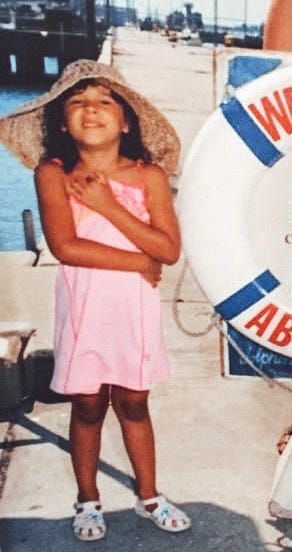
Sabrina’s Take:
I’m Mixed-Race
…And My Identity is Mine to Decide, Not Yours—and Not Donald Trump’s
The media discourse surrounding Kamala Harris’ biracial identity is triggering Mixed-Race folks across the country—including me. This constant scrutiny is not just a curiosity; it’s a painful reminder of how our identities have been debated, dismissed, and dictated by others throughout U.S. history.
Donald Trump said Kamala Harris “happened to turn Black.” He asked, “I don’t know, is she Indian or is she Black?” These continued discussions and interrogations of the Vice President’s race exemplify what Mixed people in America deal with all the time: people questioning our identities, making assumptions, telling us that our identities are actually not our identities, weaponizing certain aspects of our own identities against us, and erasing certain parts of our identities when it’s beneficial to them.
I am so tired of hearing white people—and really, all people who are not of multiple races—talk about how bi/multiracial people should or can identify. I’ve been tired of it, which led me to start creating videos about this topic a few years ago.
Once, I found one of my viral videos related to Mixed-Race issues embedded in an online Black discussion forum, with strangers on the internet debating the topic of whether or not I am Black. This experience felt violating—my personal narrative was being dissected by people who didn’t even know me, with many reducing my complex identity to a simplistic argument.
Let me clarify: I don’t say that I’m Black, because I’m Mixed. My ancestors were African, European, and Latine. All of these parts make up my ancestral heritage, and I no longer quantify a “percentage” for any of them. This is because the “one-drop rule”—and any American notion equating one’s racial heritage to a math equation—is white supremacist as fuck.
Only those who have experienced being Mixed-Race understand the nuanced complexities of holding multiple identities in one body. We navigate a world where we are often seen as “not enough” of any one race to belong fully. We are frequently asked to choose sides, to fit into pre-existing racial categories that don’t accommodate our full selves. This often leaves us feeling fragmented, as if parts of our identity are invalid or invisible.
Yet, for some reason (ahem, white supremacy), the wildly inappropriate debates about biracial identities continue. We see it once again with Kamala Harris, exactly as we did with Barack Obama. But American rhetoric around Mixed identities has always been this way.
The institutionalization of the one-drop rule—through the efforts of eugenicists and proponents of scientific racism, like Walter Plecker, who drafted and lobbied for the Virginia legislature’s passage of the Racial Integrity Act of 1924—highlights America’s deep-seated white supremacy. This historical context helps explain why Mixedness is still so trivialized today, affecting not only public figures like Kamala Harris but also countless Mixed folks like myself, who are constantly pressured to simplify our identities to fit outdated, made-up racial constructs.
I made this ridiculous TikTok video in 2022—back when Nicki Minaj’s song “Super Freaky Girl” was viral with a trend where TikTokers remixed the lyrics to explain one thing about them. My version begins like this: “One thing about me is when I was a teen, other people in my town didn’t look like me.” Throughout, I jokingly sing/rap the lyrics I wrote about being Mixed-Race and growing up in a rural white Minnesota town. Although the tone of my video is humorous, the substance is vulnerably real.
Looking back on this and other videos I made, it’s clear that this creative outlet—and using humor as a coping mechanism for an otherwise dark subject matter—was a way for me to process the pain I’ve felt as Mixed person for years.
In high school, one of my classmates gave me the nickname “the Samoan girl.” At the time, because my dad was adopted, our Blackness was a hidden part of our history. [My dad’s white adoptive family actually told people he was Italian (and sometimes Greek)—not Black—when they were asked, “Why did you adopt a little nigger baby?”]. My high school nickname, while seemingly innocent, reinforced the erasure of my true heritage and contributed to a sense of confusion about my identity. It was a daily reminder that my true self was not seen or understood by those around me, just as much as I didn’t understand it myself.
Before I was even born, part of my identity was taken from me. My dad’s Black history was intentionally stripped away from him, and that was passed on to me, his child. This is an all too common experience for Mixed people in America. The erasure of my dad’s Blackness is quite literally the definition of white-washing American history.
Right now, instead of focusing on her policies, popular discourse around Kamala Harris is centered on her racial identity.
Trump’s running mate, JD Vance, characterized Vice President Harris as “a chameleon,” alleging that “she presents a different posture, depending on which audience she’s in front of.”
At first glance, Trump and Vance’s remarks might simply suggest these white men’s lack of understanding of the code-switching that people of color are forced to engage in as they move through varying social contexts.
However, on a deeper level, it’s clear that this is a strategic campaign move that aligns with the Trump Administration’s ongoing efforts to undermine political, civic, and legal initiatives aimed at promoting racial justice in the U.S. (i.e., DEI), furthering their agenda rooted in white supremacy.
Donald Trump is a white man, and part of his political strategy is to raise concern about the racial identity of a biracial woman of color. Within America’s racism and xenophobia, if Trump presents his opponent as “other” or “not one of us”—she becomes someone who cannot be trusted by the American public.
When you enter a space as a Mixed person, people immediately check racial boxes for you. When you don’t fit into their version of a familiar racial category, you are challenged and schooled on what you really are.
Once, I was working a show for my mom’s karaoke/DJ company at a local bar. A table full of white biker dudes waved for me to come over and informed me that they were guessing my race. “Which guess is right?”—as if my racial identity was a trivia question.
We grapple with the reality of simultaneously embodying both the oppressed and the oppressor. We have our own internal struggles, and we don’t need society’s small-minded questions externally imposed on us as well.
In the face of these challenges, it’s crucial for Mixed-Race individuals to reclaim our narratives and assert our valid, complex, and deeply-personal identities on our own terms. Kamala Harris’ candidacy should be a moment of celebration and progress, not a battleground for outdated and oppressive debates.
As a society, envisioning a future where we move beyond superficial judgments and recognize the beautifully rich, multifaceted identities that contribute to our country’s collective strength is essential.